
Tag: Business and finance
The bond market defies the doomsters

THE yield on the ten-year Treasury bond fell to 2.13% on August 28th, after North Korea fired a missile over Japanese territory. Investors tend to buy government bonds when they feel risk-averse. That will have come as a surprise to those commentators who have called the bond market a “bubble” that is sure to burst; one British magazine made this a cover story back in September 2001. Every time the ten-year yield falls close to 2%, press references to a bond bubble seem to increase (see chart; the yield is inverted).

It is not just the press. Investors have been cautious about bonds for a while; the vast…Continue reading
Uber picks Dara Khosrowshahi as its new boss
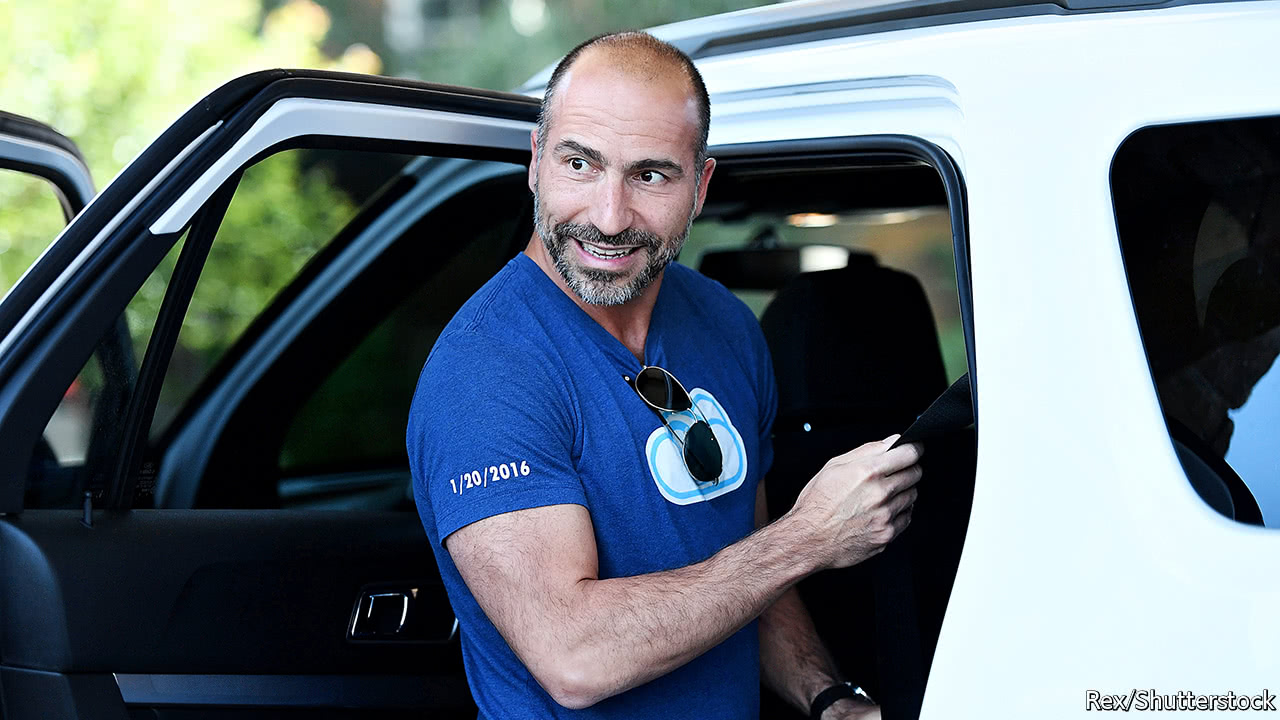
“A LEADER is a dealer in hope,” said Napoleon. For much of this year Uber, a ride-hailing firm, has lacked both leadership and optimism. But on August 27th news leaked that Uber had poached as its new chief executive Dara Khosrowshahi, the boss of Expedia, an online travel company. Mr Khosrowshahi is seen as an astute dealmaker and a canny manager. In his 12 years at the helm of Expedia, the gross value of its hotel and other travel bookings more than quadrupled and its pre-tax earnings more than doubled.
Can he rally the troops? Uber is fast-growing and was last year valued privately by investors at around $68bn, but has suffered a host of setbacks, which led to the ousting of Travis Kalanick, its co-founder and boss, in June. The firm faces a criminal probe by America’s Department of Justice into a covert software feature that showed regulators different versions of its app, as well as a new investigation into whether it…Continue reading
Samsung’s boss is sentenced to prison
SAMSUNG’S founding family, the Lees, have good reason to dislike room 417 of Seoul’s Central District Court. In 2008 it was where Lee Kun-hee, the chairman of the sprawling South Korean conglomerate, was found guilty of tax evasion. On August 25th his son, Lee Jae-yong, the vice-chairman of Samsung Electronics, stood in the same room and was sentenced to five years in prison on charges including bribery, embezzlement and perjury. The elder Mr Lee has been in hospital since suffering a heart attack in 2014. Samsung now lacks both its official and de facto bosses.
The younger Mr Lee, who plans to appeal against the verdict, was accused of paying bribes to Choi Soon-sil, a confidante of the country’s former president, Park Guen-hye. Prosecutors had argued that he hoped the payments would secure government support for an $8bn merger of two Samsung affiliates, Cheil Industries, the group’s unofficial holding company, and Samsung C&T, a construction firm. The state-run National Pension Service, the single biggest shareholder in C&T, voted for the plan in July 2015. The deal was controversial, but it helped Mr Lee consolidate his control over the group and clear the way for his succession.
The decision is a milestone in a broader influence-peddling scandal that brought down Ms Park. She was impeached in March and arrested soon after; she now…Continue reading
Appalling behaviour on London’s Tube

WITH 1.4bn passengers annually, the London Underground is one of the world’s busiest transport systems. It is also one of the most crowded, sometimes producing an element of friction among commuters over small acts of inconsideration. This week YouGov released the results of a survey of the things that most wind up passengers as they scurry around the Tube. Impatient commuters pushing to get into the carriage without letting riders off first are what drives people mad the most.

The survey also revealed some interesting differences when broken down by gender: “manspreading” (unfurling one’s legs wide enough to take up unnecessary room) and…Continue reading
American bosses continue to lobby, more quietly

IN CORPORATE America, “Trump” seems to be a dirty word, at least in public. After President Donald Trump seemed to equate the actions of white supremacists and their opponents in Charlottesville earlier this month, dozens of chief executives abandoned his advisory councils. Several organisations cancelled fundraising galas booked at Mr Trump’s Mar-a-Lago resort in Florida. Lloyd Blankfein, the boss of Goldman Sachs, an investment bank, compared Mr Trump to the dark shadow cast over parts of America by a solar eclipse: “We got through one, we’ll get through the other.”
Look past the public repudiation, though, and the schism is less stark. As Jason Furman of Harvard University’s Kennedy School, who led the White House Council of Economic Advisers during Barack Obama’s presidency, points out, the bosses’ public rejection of Mr Trump has done nothing to sap their appetite to guide policy. Lower-ranking executives from large firms continue to serve on informal…Continue reading
Does ageing explain America’s disappointing wage growth?
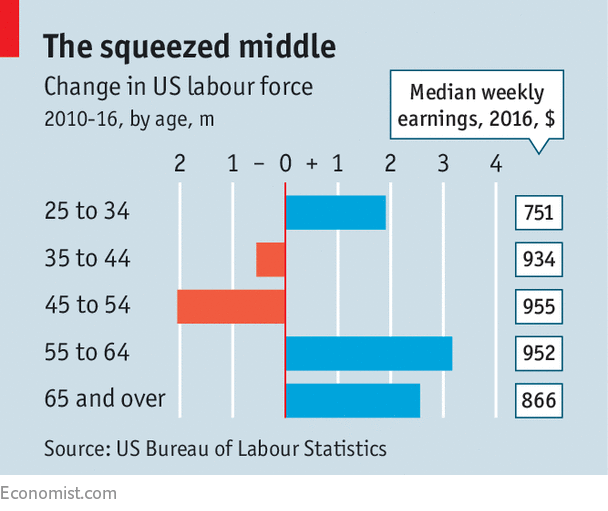
WHEN America’s unemployment was last as low as it has been recently, in early 2007, wages were growing by about 3.5% a year. Today wage growth seems stuck at about 2.5%. This puzzles economists. Some say the labour market is less healthy than the jobless rate suggests; others point to weak productivity growth or low inflation expectations. The latest idea is to blame retiring baby-boomers.
The thinking goes as follows. The average worker gains skills and seniority, and hence higher pay, over time. When he retires, his high-paying job will vanish unless a similarly-seasoned worker is waiting in the wings. A flurry of retirements could therefore put downward pressure on average wages, however well the economy does. The first baby-boomers began to hit retirement age around 2007, just as the financial crisis started. And since 2010, the first full year of the recovery, the number of middle-aged workers has shrunk considerably. They have been replaced partly by lower-earning youngsters (see…Continue reading
Management turmoil at Infosys is particularly ill-timed
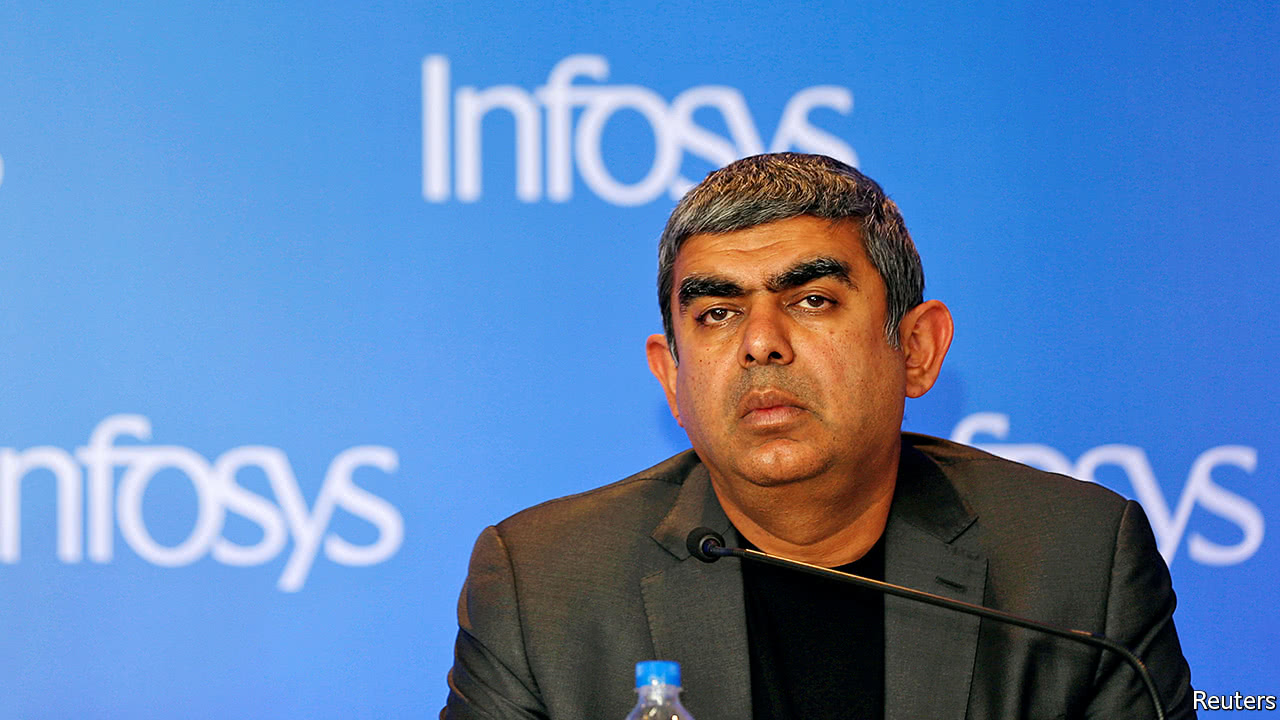
THE quickest way to start a Mexican wave in India is to head to the campus of Infosys, an IT outsourcing firm based in Bangalore, and ask all those who think they should be in charge to raise their hands. On August 18th the company’s chief executive, Vishal Sikka (pictured), resigned unexpectedly. But he still serves as executive vice-chairman. Now a chairman, a co-chairman, the interim chief executive who succeeded Mr Sikka, the board of directors and a retired founder all seem to think they should be running the show. The stalemate risks leaving the firm without a leader just as it had started the urgent work of overhauling its business.
The company’s management crisis is surprising. As one of only a few Indian IT firms that multinational companies trust to build and maintain their computer systems, Infosys has long sought to exude an aura of professionalism bordering on the dull. But clashing egos at the top now make it seem anything…Continue reading
Are men more irrationally exuberant than women?
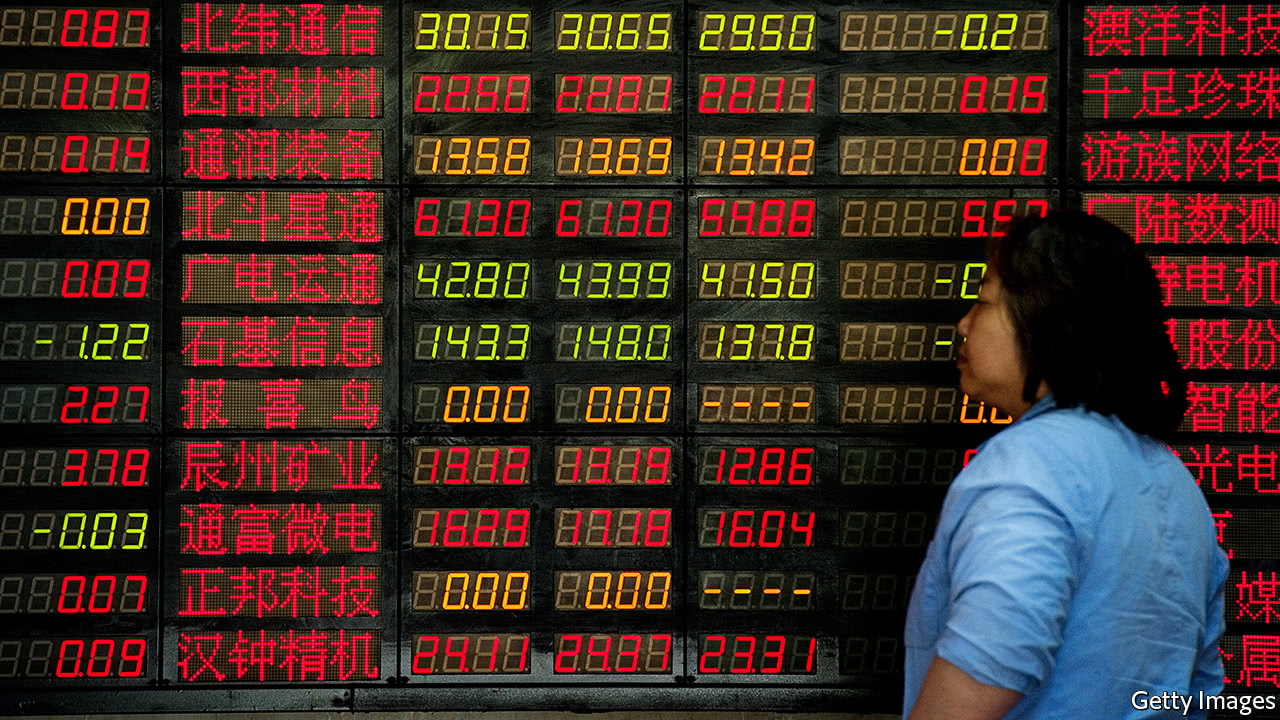
WOULD more women on the trading floor inject a dose of sanity into the world’s financial markets? This question gained prominence after the 2007-08 crisis. As Christine Lagarde, then France’s finance minister and now head of the IMF, quipped, had Lehman Brothers been Lehman Sisters, history would have been different. Many studies support this idea, showing that testosterone-laden men are prone to overconfidence in trading. Women are more cautious.
But things may not be so simple. Previous research has mostly used evidence from the West. To test if the conclusions apply universally, Wang Jianxin of China’s Central South University, Daniel Houser of George Mason University and Xu Hui of Beijing Normal University looked at both America and China. And they found that in China’s markets, women can be just as manic as men.
The economists arranged for 342 students to form experimental markets. They were allocated dividend-paying…Continue reading
Facebook, Twitter and Apple get into the television business

ON AUGUST 27th the season finale of HBO’s “Game of Thrones”, one of the most expensively produced series in television history, will air to an audience of more than 10m Americans. When it ends, viewers can switch to one of the most inexpensively produced shows in the industry, “Talk the Thrones”, in which boffins sit around and discuss HBO’s show. Hundreds of thousands are expected to watch.
Besides the obvious gap in entertainment value (one has dragons, the other has people talking about them), there is another distinction between the series. “Game of Thrones” is available only for a subscription on pay TV. “Talk the Thrones” is free on Twitter, produced by a digital site called The Ringer and sponsored by Verizon, a telecommunications giant. Although the HBO series is more popular, “Talk the Thrones” may be a better sign of how the TV industry might evolve.
A new generation of TV shows is being made for…Continue reading
Artificial intelligence will create new kinds of work
WHEN the first printed books with illustrations started to appear in the 1470s in the German city of Augsburg, wood engravers rose up in protest. Worried about their jobs, they literally stopped the presses. In fact, their skills turned out to be in higher demand than before: somebody had to illustrate the growing number of books.
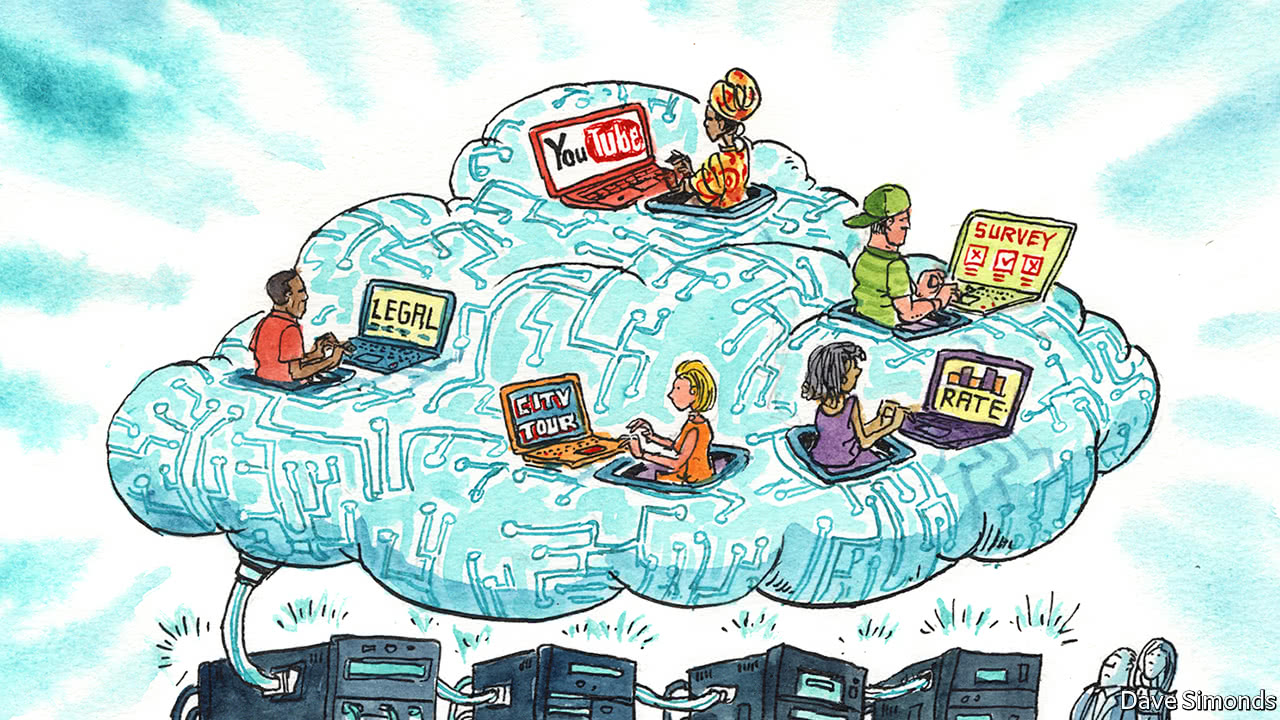
Fears about the impact of technology on jobs have resurfaced periodically ever since. The latest bout of anxiety concerns the arrival of artificial intelligence (AI). Once again, however, technology is creating demand for work. To take one example, more and more people are supplying digital services online via what is sometimes dubbed the “human cloud”. Counter-intuitively, many are doing so in response to AI.
According to the World Bank, more than 5m people already offer to work remotely on online marketplaces such as Freelancer.com and UpWork. Jobs range from designing websites to writing legal briefs, and typically bring in at least a few…Continue reading