
Tag: Business and finance
An Israeli pharma champion sickens

THE headlong plunge of shares in Teva, a pharmaceutical giant—down by over 40% since August 2nd—is causing consternation beyond the firm’s shareholders and employees. The company was founded in Jerusalem in 1901, is the largest in Israel and is the country’s only multinational with its headquarters still at home. Since beginning its rapid expansion abroad in the early 1980s it has been called “the nation’s share” by Israelis, whose pension funds have invested heavily in its success.
That prosperity came chiefly thanks to the firm’s most popular proprietary drug, a bestselling medication for multiple sclerosis called Copaxone. Over the past two decades its sales paid for a global spree of buying generic-drugs competitors. Last year Teva completed its most ambitious purchase, of Actavis Generics, an American generics manufacturer, for $40.5bn; financing the deal took its debt to $35bn. But Teva’s transformation into the…Continue reading
Who will be the next chair of the Federal Reserve?
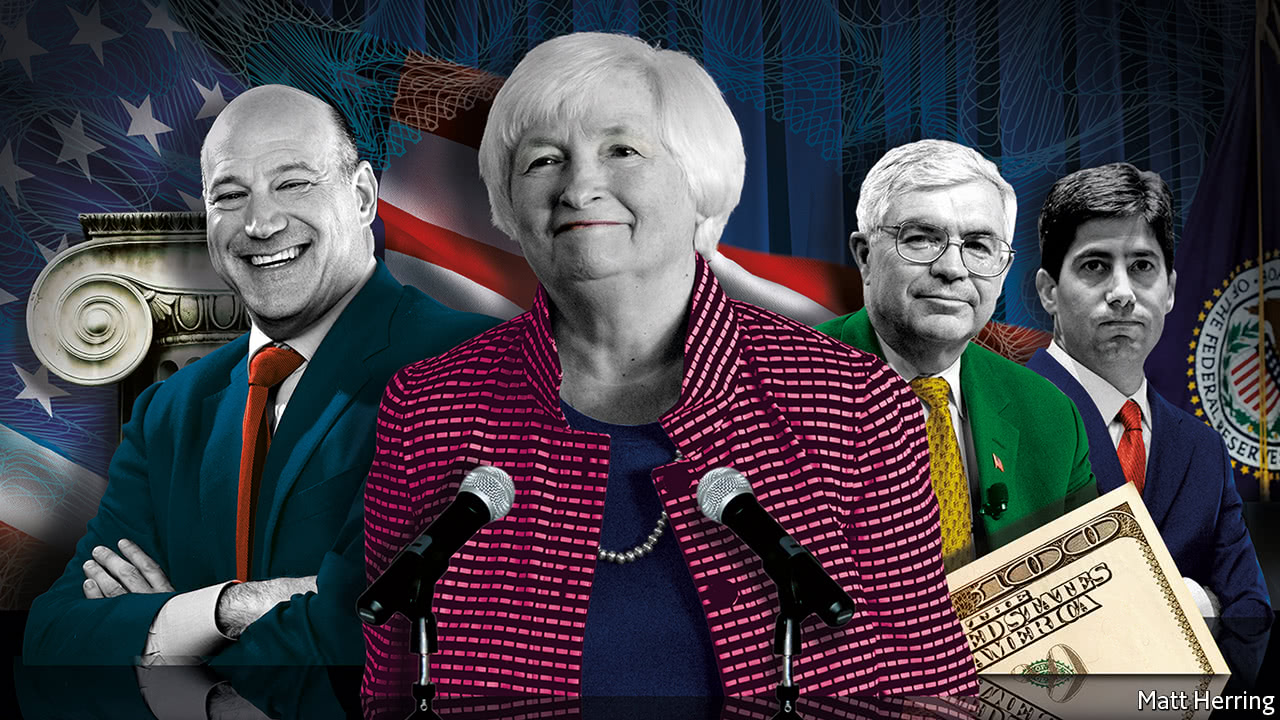
LOOK only at unemployment and inflation, says Peter Conti-Brown, a historian of the Federal Reserve, and Janet Yellen is the Fed’s most successful boss of all time. The second indicator may be below target, but that is a blip compared with the recessions most Fed chairmen have endured. So it is perhaps not surprising that President Donald Trump is openly considering retaining Ms Yellen, a Democrat installed by Barack Obama, after her term ends in February 2018. Nor by historical standards is it odd: the Fed’s past three leaders were all reappointed by presidents from the other party. Yet Ms Yellen, whom Mr Trump criticised on the campaign trail, is not the leading candidate. PredictIt, a betting site, gives her a 28% chance of staying put. In front of her, with a 36% chance of appointment, is someone else Mr Trump is publicly weighing up: Gary Cohn (on the left above).
Mr Cohn was until January the chief operating officer and president of Goldman Sachs. He left that role to become the…Continue reading
Rupert Murdoch’s bid for Sky hits more obstacles

RUPERT MURDOCH’S penchant for mass-market media has made him billions of dollars. It also gets in the way of empire-building. In 2011 News Corp’s bid to take full ownership of Sky, a European pay-TV giant, fell apart amid public rancour over phone hacking by journalists at the News of the World, one of his tabloids (since closed). Now a renewed Murdoch family takeover attempt for Sky, a bid of £11.7bn ($15.2bn) by 21st Century Fox, faces yet more scrutiny over concerns about alleged scurrilous reporting at Fox News, Mr Murdoch’s American cable-news channel.
On August 8th Karen Bradley, Britain’s culture secretary, asked Ofcom, the media regulator which had already reviewed the bid, to take another look to determine whether 21st Century Fox meets Britain’s broadcasting standards. Ms Bradley’s request followed fresh complaints about Fox News from members of parliament, including Ed Miliband, the former leader of the opposition Labour Party, and from…Continue reading
Research points to a new explanation of “Dutch disease”
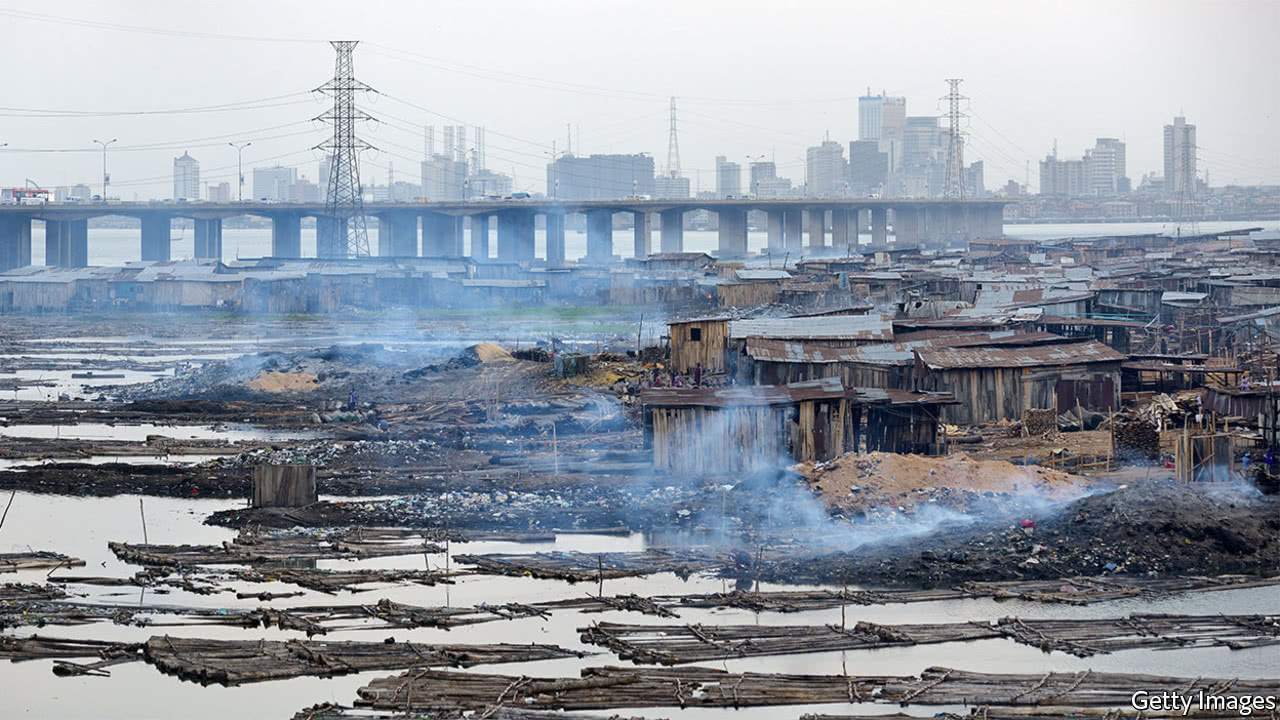
IN 1959 geologists discovered 2.8trn cubic metres of natural gas—the largest field in Europe—under the city of Groningen in the Netherlands. Cheap gas and free-spending energy firms were thought to be good news for the entire Dutch economy. But higher gas-export prices in the 1970s raised the value of the guilder by a sixth, hitting the competitiveness of Dutch manufacturing and services. In 1977 The Economist dubbed this economic curse “Dutch disease”.
Other resource-rich countries have tried to avoid this trap. Some have adopted fixed exchange rates to prevent their currencies appreciating. Others save capital inflows in sovereign-wealth funds to avoid distorting their economies. Yet many still have underdeveloped non-commodity sectors. And despite having plenty of cash to invest, banks are particularly affected.
Two recent IMF papers point to a new explanation of why commodity exporters have such stunted banks. The problem, they…Continue reading
Mistrust in America could sink the economy

AMERICA is a grumpy and confused place. For an overarching explanation of what has gone wrong, a decline in trust is a good place to start. Trust can be defined as the expectation that other people, or organisations, will act in ways that are fair to you. In the White House and beyond there is precious little of it about. People increasingly view institutions as corrupt, strangers as suspicious, rivals as illegitimate and facts as negotiable.
The share of Americans who say “most people can be trusted” fell from 44% in 1976 to 32% in 2016, according to a survey from the University of Chicago. In a new book, “The Retreat of Western Liberalism”, Edward Luce, a commentator for the Financial Times in Washington, argues that distrust will contribute to America’s decline and eventually, even, to autocracy. Lack of faith is chewed over in boardrooms, too. In his latest letter to shareholders, Jamie Dimon, JPMorgan Chase’s boss, describes trust as America’s…Continue reading
Airport profits: ready to depart
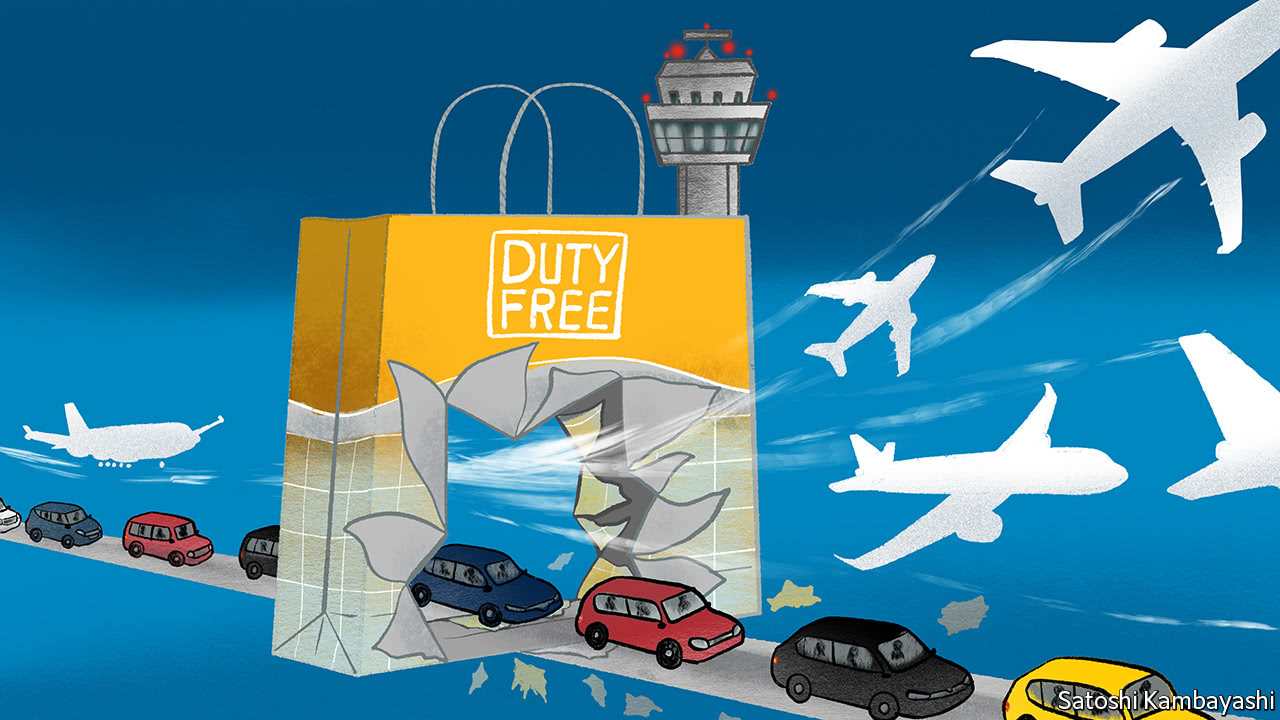
WHEN Heathrow airport opened, in 1946, the only retail facilities were a bar with chintz armchairs and a small newsagent’s. The first terminal was a tent, a far cry from the four halls, resembling vast shopping malls, at the London airport today. Retail spending per passenger is the highest of any airport. This summer’s consumer crazes include Harry Potter wands and cactus-shaped lilos.
Heathrow’s journey from waiting room to retail paradise is the story of many airports. Before the 1980s, most income came from airlines’ landing and passenger-handling charges. Then “non-aeronautical” revenue—from shops, airport parking, car rental and so on—rose to around two-fifths of their revenues, of $152bn worldwide in 2015. But amid signs that non-aeronautical income is peaking, especially in mature aviation markets such as North America and Europe, the industry fears for its business model.
When airports were state-owned, and run not for profit but for the benefit of the…Continue reading
Where might the next crisis come from?
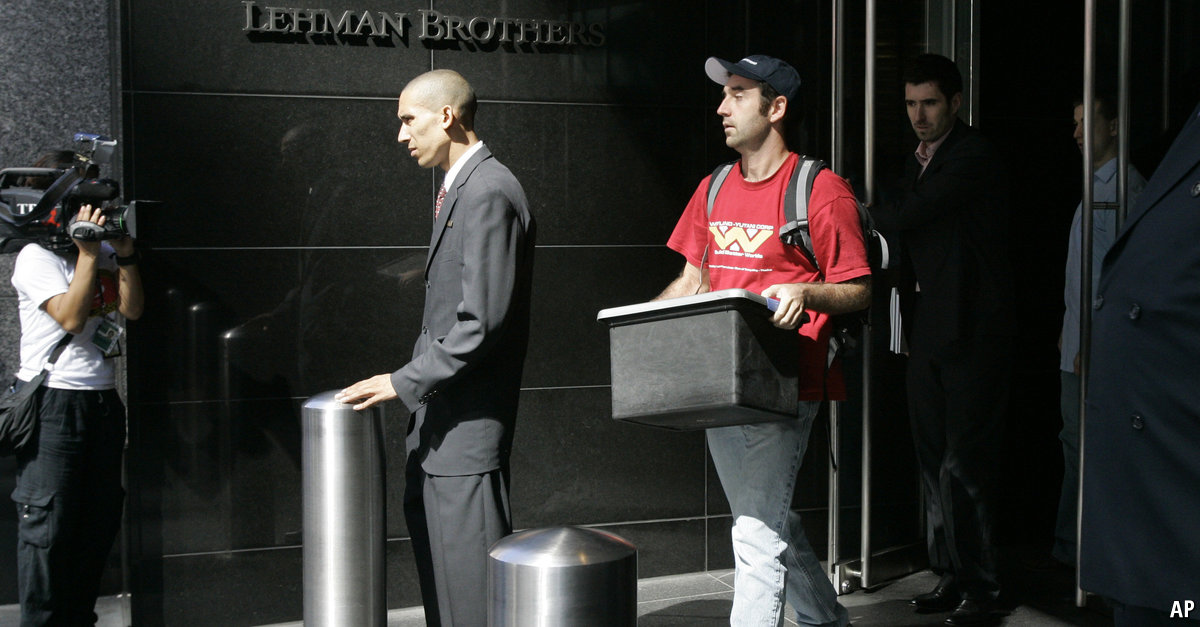
TEN years ago, BNP Paribas, a French bank, temporarily suspended dealings in three funds, citing “the complete evaporation of liquidity in certain market segments of the US securitisation market”. Many people treat this as the start of the credit crunch but one can trace it back to the need for Bear Stearns to rescue hedge funds that invested in mortgage-backed securities in June, or the signs of home loan defaults and failing mortgage lenders that emerged in late 2006. The subsequent tightening of credit and loss of confidence in the banking system eventually led to the collapse of Lehman Brothers, when the crisis reached its height in the autumn of 2008 (see picture).
The inevitable question on the occasion…Continue reading
Why an eight-hour bus ride from Los Angeles to San Francisco might beat a flight

THERE is a new way to travel between Los Angeles and San Francisco. At $230 for a round trip, it may not be cheaper than flying, but at least it is slower.
Cabin is an interesting experiment; an attempt to compete with airlines by promising a better night’s sleep. Flying between the two cities may take less than an hour and a half. But getting to the airport, shuffling through the security queue, waiting at the gate, picking up your bag upon arrival, and getting from the airport to your actual destination can nearly quadruple the total travel time. That means a trip can eat up most of the day. Or if you want to travel at night, you have about an hour to sleep, between several hours of hassle and tedium.
Rather than go through that rigmarole, Cabin is betting that some passengers will instead choose an overnight bus, on which they crawl into sleeping pods, stacked like bunk beds but ensconced behind curtains and soundproof walls, and wake up eight hours later at their destination. On offer: water, coffee, melatonin and a…Continue reading
Capitalism and the absence of creative disruption

NINE straight highs for the Dow Jones Industrial Average might suggest that all is well with capitalism. But on the contrary, they could be a sign that things have been going profoundly wrong with the way the system is working.
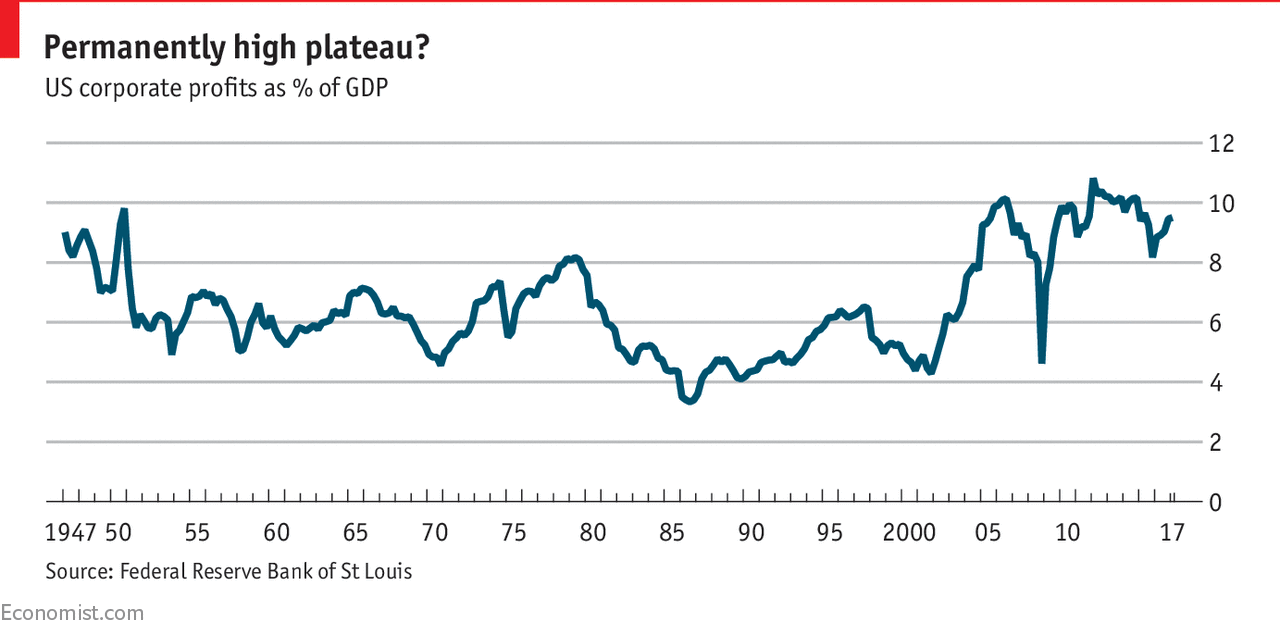
The main driver for the surge in share prices this year has been the strength of profits; second quarter profits for S&P 500 companies are around 12.6% higher than a year ago, according to Andrew Lapthorne at SG, a French bank. As the chart shows, relative to GDP, profits seem to be regaining their levels of recent years. And those levels are much higher than they have been in much of the post-war era (see chart).
A Google employee inflames a debate about sexism and free speech
“DON’T be evil” is Google’s corporate motto. If only it were so simple. The online-search giant is in a tricky spot after an employee published a long, anonymous memo online about why women are under-represented in the technology industry. The main reason may not be sexism, asserted James Damore, the young Harvard-educated software engineer later revealed to be the memo’s author, but biological factors. Women are more interested in people and emotions, he wrote, and tend towards “neuroticism”, meaning they are more anxious than men and worse at handling high-stress jobs.
The ten-page memo also lamented liberal Silicon Valley’s new willingness to “discriminate to create equal representation” and its reluctance to hear opinions that clash with the mainstream view on diversity. On August 7th Mr Damore told Bloomberg, a news service, that he had been fired by Google. Sundar Pichai, the company’s boss, said that portions of the memo violated its code of conduct…Continue reading