
Tag: Business and finance
Is Emmanuel Macron serious about privatisation?
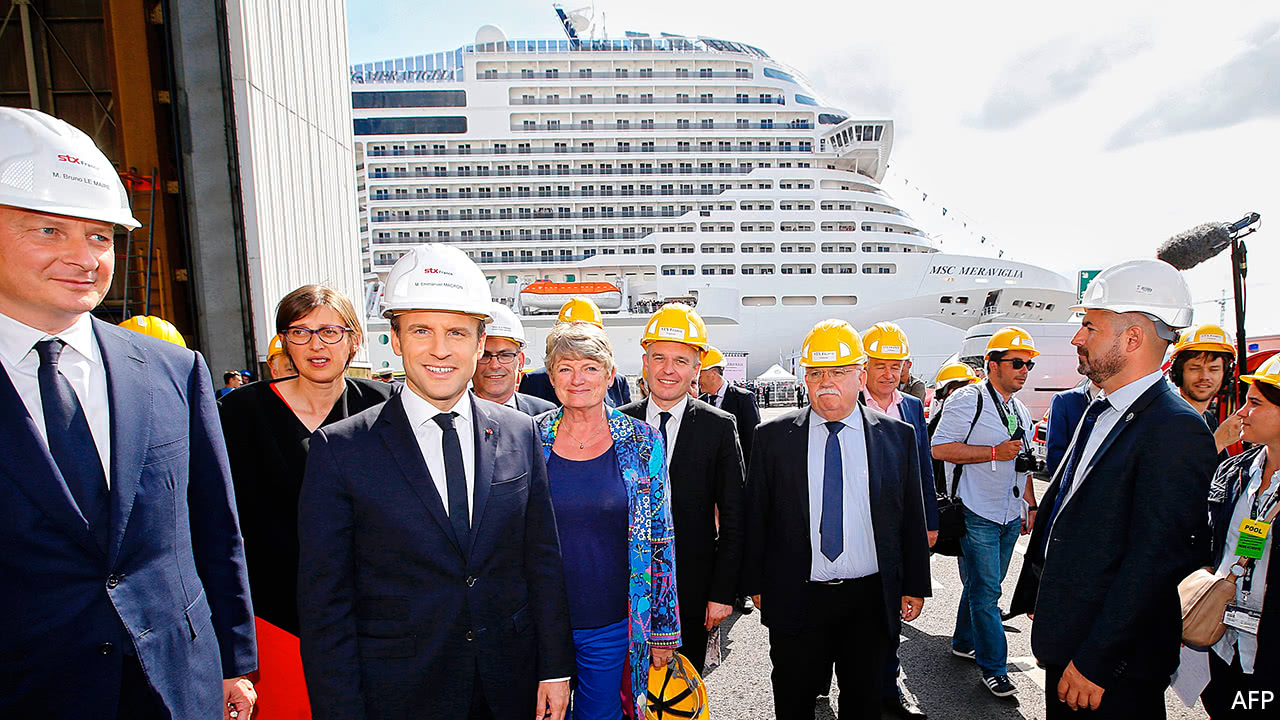
ONE reason for Italian anger over the decision on July 27th by Emmanuel Macron, France’s president, to stop Fincantieri, a shipbuilder from Trieste, winning control of a French shipyard at Saint-Nazaire, was that recent cross-border deals have mostly gone France’s way. Italian businesspeople have grown nervous about French firms’ “colonisation” by means of acquisitions in luxury goods, media and telecoms, including the €46bn ($55bn) merger between Luxottica, an Italian maker of spectacles, and France’s Essilor, announced in January (the group’s headquarters will be in Paris). The bad taste will linger even if the two governments strike a deal over Saint-Nazaire by the autumn, as they have pledged.
Yet Mr Macron’s move has been even more dismaying for those at home who want the state to get on with privatisation. During his presidential run Mr Macron promised to raise €10bn from sales of some of the state’s sprawling portfolio of holdings in firms. The aim was to pay…Continue reading
The private-equity business learns to be more flexible
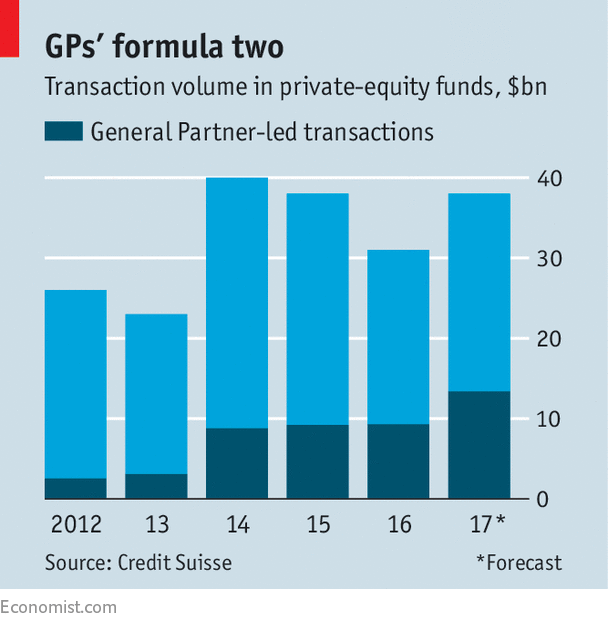
THE private-equity business presents a paradox. Its barons like to boast of revamping the companies they buy. But they themselves have been steadfast to their own business model, centred on funds with a ten-year life. Within this time span, fund managers, known as “general partners” (GPs), commit to buy, manage and sell a clutch of companies; investors commit to lock up their money for the duration. Sometimes GPs or investors chafe at the time constraint. A new segment of the secondary market, “GP-led” deals, has sprung up to help them.
Investors wanting to exit a fund early need to find a buyer for their stake in the secondary market. But sometimes none will offer an attractive price. Sometimes also, a fund nearing its expiry date may find itself still holding a large number of its investments. GP-led deals place the onus on fund managers to find buyers.
Such transactions have quickly grown from just 10% of the secondary market in 2012 to over one-third this year, according…Continue reading
Genetic testing threatens the insurance industry
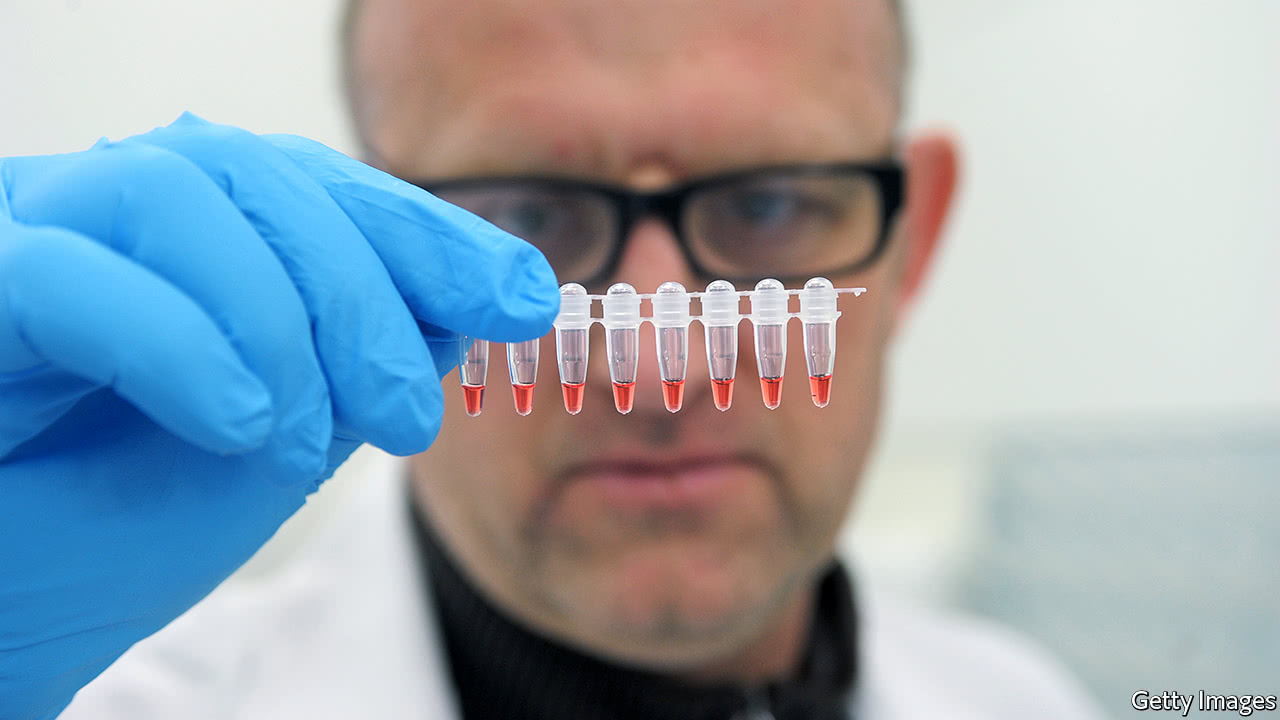
IF A genetic test could tell whether you are at increased risk of getting cancer or Alzheimer’s, would you take it? As such tests become more accessible, more and more people are saying “yes”. The insurance industry faces a few headaches as a result.
Once used only for medical reasons, basic predictive genetic tests can now be ordered online for a few hundred dollars. One company, 23andMe, in California, has collected some 4,000 litres of sputum since 2007, enlightening 2m people on their ancestry, health risks and what they may pass on to offspring. In April it received regulatory approval to screen for risk factors connected to ten diseases and genetic conditions, including late-onset Alzheimer’s and Parkinson’s. The ruling could open the floodgates for others to sell direct to consumers.
“Information is power”, argue many who take such tests. But insurers fear that without equal access to such information, they…Continue reading
Hong Kong, the global capital of hustle, is gripped by self doubt
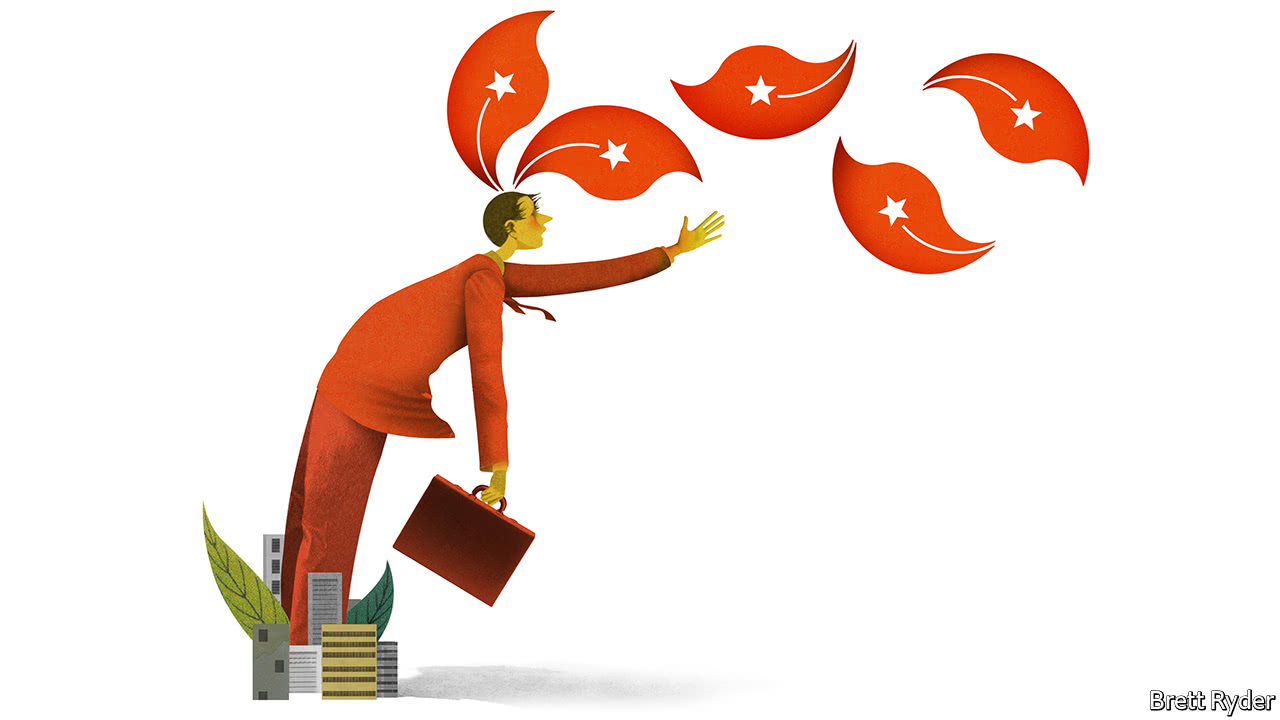
OF THE world’s three great commercial centres—New York, London and Hong Kong—two are on the defensive. London faces a rupture with the European Union, which wants to seize the City’s euro-related activities and shift them inside the currency zone. In Hong Kong the fear is of deeper assimilation by mainland China, followed by irrelevance.
Entrepots, after all, can become obsolete. Venice once teemed with merchants, not tourists. Yet while London’s problem is complacency, Hong Kong’s pessimism seems overdone. It remains vital both to China and to the country’s trading partners—the adaptor that converts the mainland’s financial and legal voltage into the one used by the rest of the world.
Today’s gloom partly reflects a fear of Chinese autocracy. During Schumpeter’s recent visit, Xi Jinping, China’s president, in town for the 20th anniversary of the resumption of mainland rule, warned that, while the constitutional structure of “one country, two…Continue reading
Why national accounts might be like corporate balance-sheets
THE easiest way to get an economist to laugh sardonically is to compare a country’s finances to those of a family. It is both simplistic and wrong, they will argue, for politicians to say that a country “must live within its means”.
But in a new working paper* from the National Bureau of Economic Research, Patrick Bolton and Haizhou Huang make a different comparison; between the finances of a government and those of a company. A business can finance itself in three ways: through internal funds (its revenues); through borrowing; and through equity (the issuance of new shares). In the first two cases, it is easy to see the analogy with a nation state; governments can raise money from taxes or borrow in the form of government bonds.
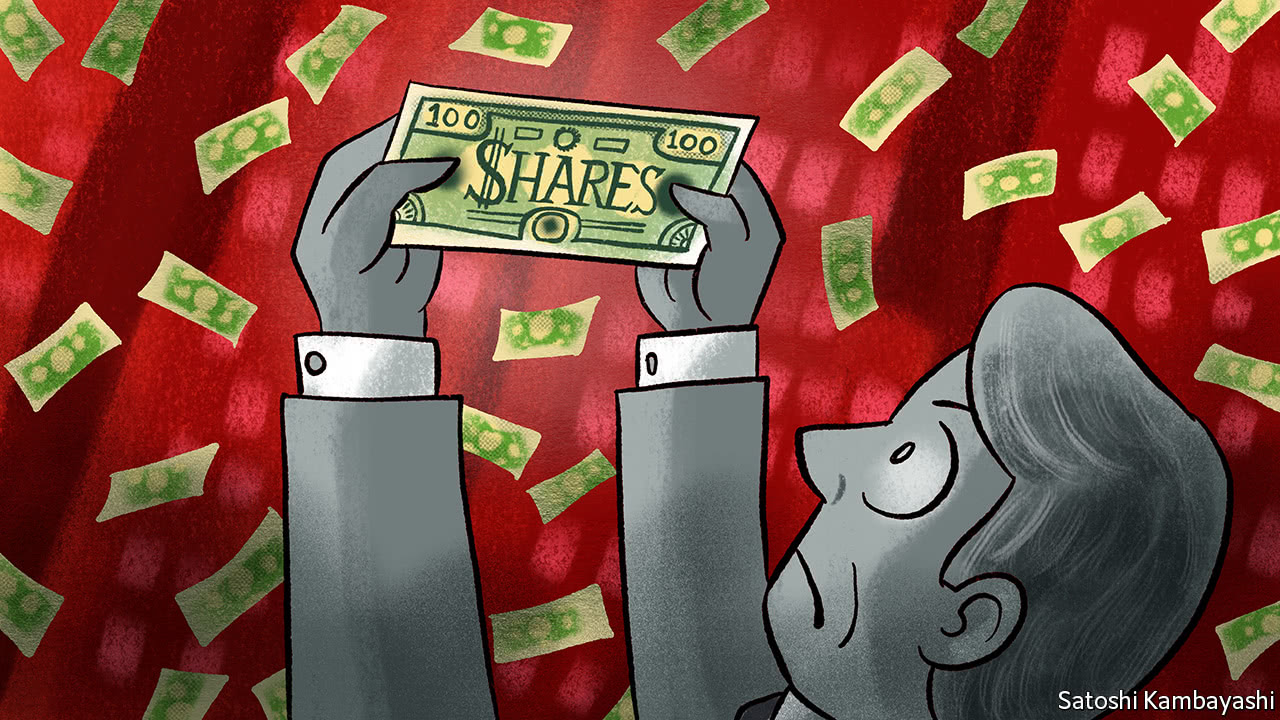
But the paper’s most striking idea is that the national equivalent of equity is fiat money. Governments are able to issue money that can be used to settle debts and pay taxes—the term “fiat” comes from the Latin for “let it be done”….Continue reading
How crisis-hit economies become investment darlings
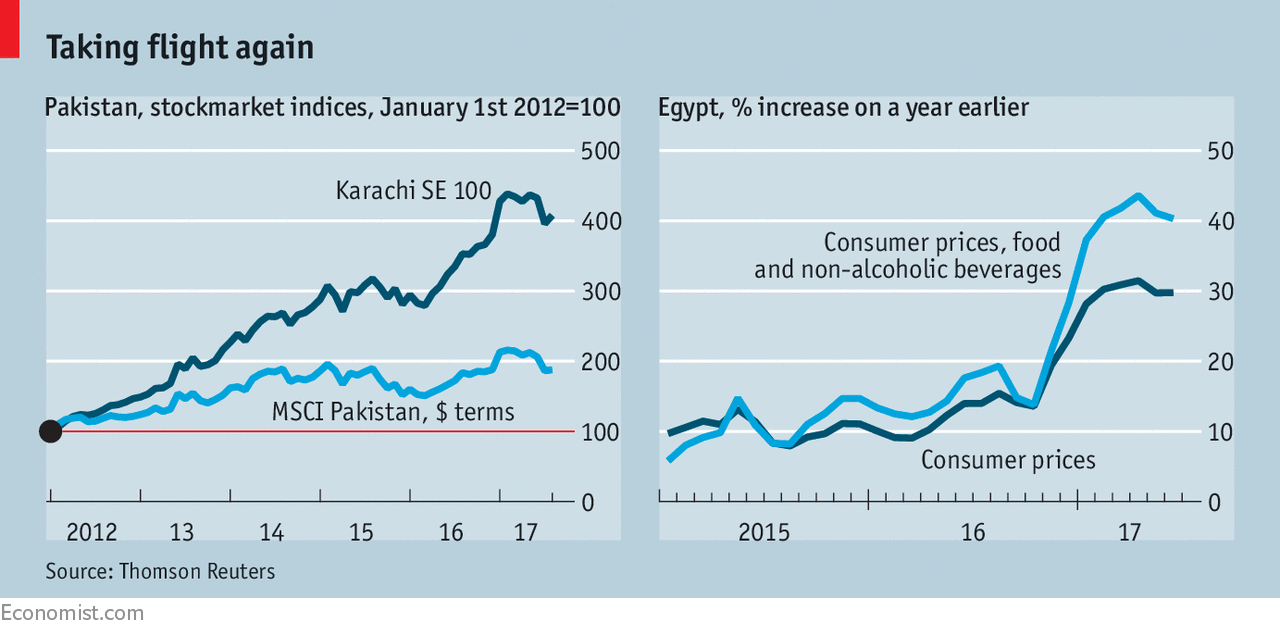
NAWAZ SHARIF is the ex-prime minister of Pakistan again. His third stint in the job ended on July 28th after the Supreme Court disqualified him from office. Yet he could justifiably claim that he left Pakistan’s economy in a better state than he found it. When Pakistan last went to the polls, GDP had been growing at around 3%, a dismal rate for a poor country with a burgeoning population. Inflation was above 10%. The budget deficit had ballooned. A crisis loomed. Four years on, inflation is in the low single digits. The budget deficit has shrunk to a little above 4% of GDP. The GDP growth rate is closing in on 6%. Investors too have taken notice. Since 2012, Pakistan’s stockmarket capitalisation has doubled in dollar terms (see chart).
A tale of two markets
THE DOW Jones Industrial Average closed above 22,000 on August 2nd, something President Trump is almost certain to mention in a tweet soon*. So it might seem as if the “Trump bump”, which began on the night of the election, is continuing smoothly. But the picture is a lot more complex than that as a look at the euro/dollar rate shows (see chart). The euro fell (and the dollar rose) between election day and the end of 2016. But then came a turning point. The euro has been climbing (and the dollar retreating) for much of 2017.
For dollar-based investors, that means European shares have been a much better bet this year. As of august 2nd, euro zone shares (as measured by the FTSE Euro 100) were up 19.9% since the start of the year, while the S&P 500 was up10.7%. Looked at another way, the American market has dropped by 8% in euro terms since February 2nd.
Bitcoin divides to rule
COMPARED with Brexit, Bitexit seems a piece of cake. On August 1st, without much agonising or awkward negotiation, a group of Bitcoin activists and entrepreneurs managed to create a second version of the crypto-currency. It immediately gained a following: in less than a day of existence, the value of a unit of “Bitcoin Cash” jumped to over $600, and tokens worth more than $10bn were in circulation (although that is still much smaller than Bitcoin classic, which stood at about $2,700 and nearly $45bn).
This “fork”, as such events are called, came earlier than foreseen. But it is broadly how insiders had expected a two-year-old conflict over the future of Bitcoin to end. At the heart of this “civil war” was the question of how to increase the capacity of the system, which can only handle up to seven transactions per second. The new version is able to process 56 per second, but otherwise works much like the original one.
Will Bitcoin Cash be more than just another “altcoin”, as the many existing clones of the crypto-currency are called? It is backed by Chinese “miners”, firms that provide the computing power to confirm payments and mint new digital coins. They have been unhappy with how the original system has been managed by its developers—and made some further technical tweaks to ensure that the new Bitcoin survives. The followers of…Continue reading
A judge rules on the case of the “incredible shrinking airline seat”
THE airlines are not doing it. Congress could not either. Nor could a petition with tens of thousands of signatures. The Federal Aviation Administration declined to do it, too. But now, a federal judge may finally do what the others failed to, or would not: stop seat rows on aeroplanes inching closer and closer together.
“This is the case of the incredible shrinking airline seat,” began Judge Patricia Millett of the Circuit Court of Appeals for the District of Columbia, in her strongly worded ruling, handed down on July 28th. The case began nearly two years ago, when FlyersRights.org, a non-profit passenger advocacy group, circulated a petition demanding regulation of the distance between rows of plane seats, known as seat pitch. Average seat pitch in America, the petition noted, had declined from 35 to 31 inches in the past few decades. (American Airlines planned earlier this year to space some rows just 29 inches apart on new planes, before agreeing under pressure to add an extra inch.)…Continue reading
Many business travellers prefer not to interact with others when on trips

AS ANYONE who flies regularly for work can attest, business travellers are not constantly being doted upon. Flights are not all booked by a travel manager, nor are never-ending drinks being poured by dutiful attendants. Indeed, corporate travel might be becoming a more independent affair.
According to a recent survey, a growing number of business travellers would prefer to avoid interaction with people when on the road, at least until something goes wrong. The research by Egencia, Expedia’s business-travel arm, questioned nearly 5,000 business travellers in Europe, America and Australia. Half of them said they want to avoid human contact while travelling.
That is not because business travellers find their time on the road repugnant and want to bury themselves in their smartphones….Continue reading