
Tag: Business and finance
Eastern Bank: a 199-year-old lender becomes a tech pioneer
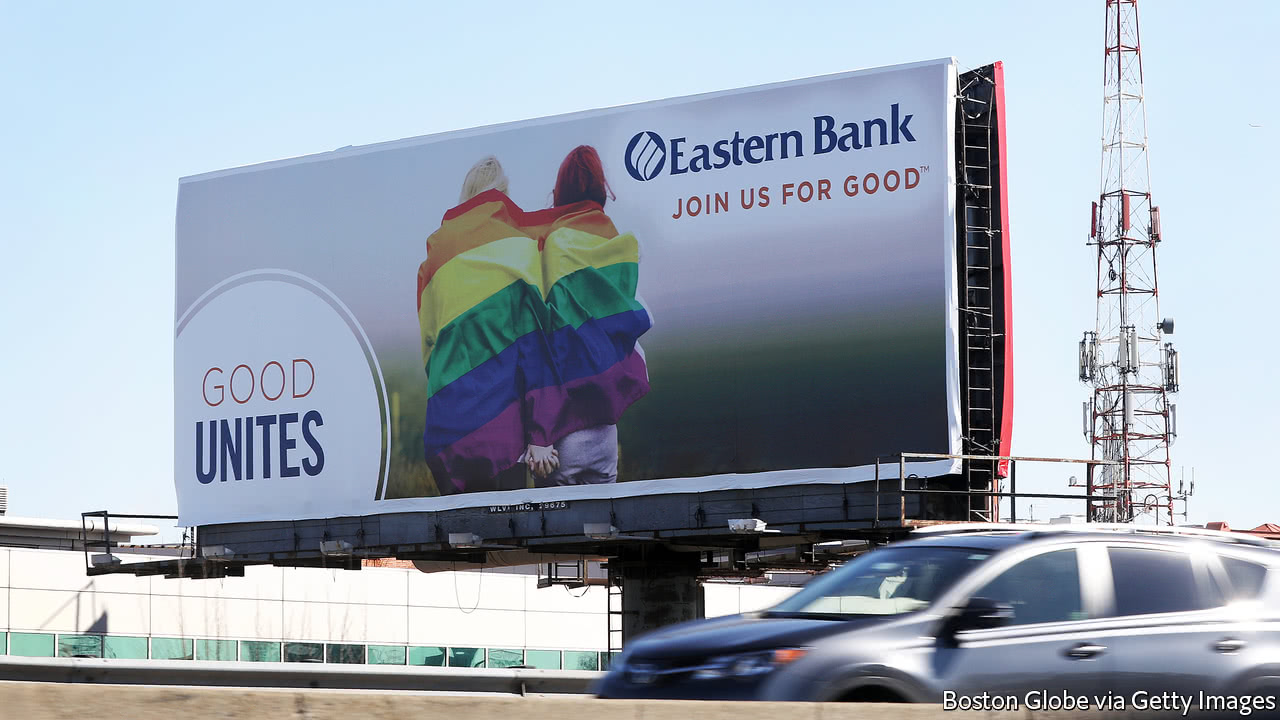
LIKE other local bankers, Bob Rivers is counting the cost of red tape. At the end of 2015 and 2016 Eastern Bank, a Boston lender of which he is the chief executive, held its balance-sheet below $10bn by briefly parking some deposits elsewhere. Now Eastern—America’s oldest and largest mutual bank, founded in 1818—has crossed the threshold. It will thus become subject to a limit on the debit-card fees retailers pay to bigger banks, and lose $9m of revenue, Mr Rivers says. Other rules will also kick in, costing $6m. The $15m total is one-sixth of Eastern’s pre-tax earnings.
At least, unlike America’s many much smaller lenders, Eastern has the wherewithal to tackle another costly burden: information technology. It is just small enough to be called a “community bank”, but also just big enough to invest in IT. Being a mutual is essential too, Mr Rivers says: he does not have to answer to shareholders about quarterly profits.
In 2014 Eastern set up an…Continue reading
Goldman Sachs is criticised for buying Venezuelan bonds
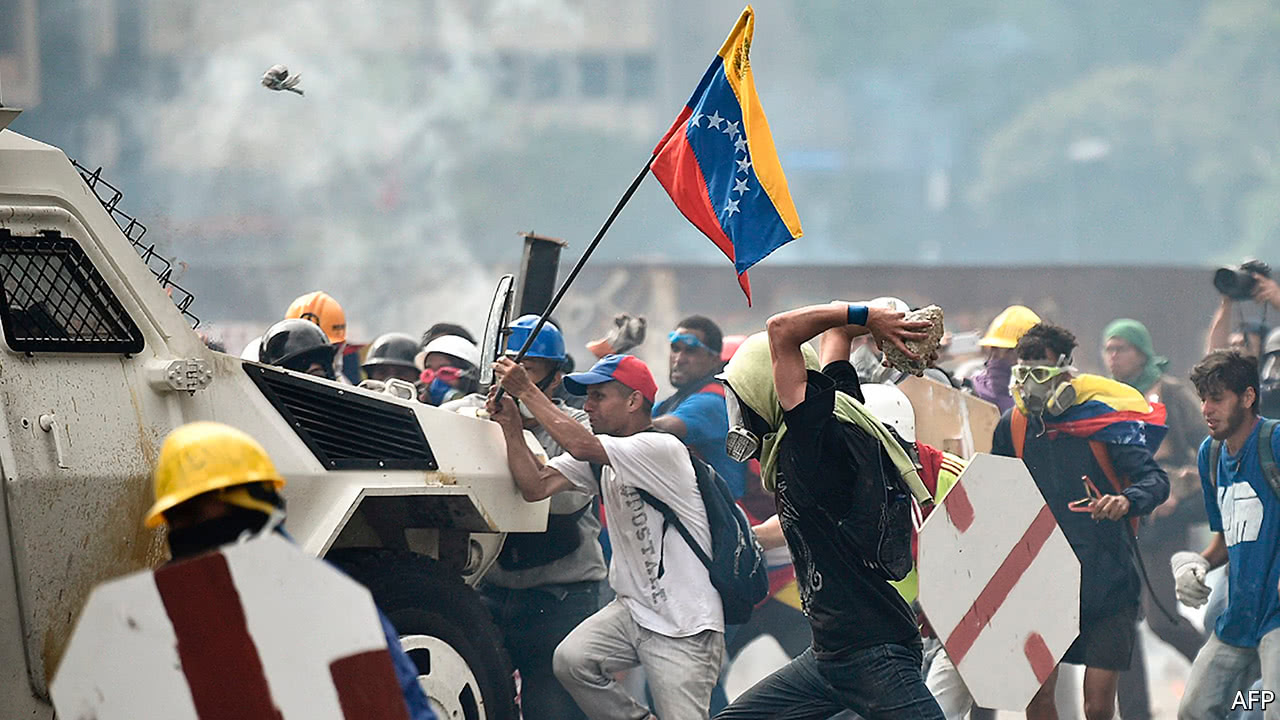
BONDS are bought and sold every second of every day without attracting attention. But it is not often that the seller is the central bank of a brutal, cash-strapped regime faced with protests; the buyer, a bulge-bracket American investment bank; and the size of the deal in the billions of dollars. A report in the Wall Street Journal on May 28th that Goldman Sachs had bought bonds with a face value of $2.8bn issued by Venezuela’s state-owned oil company, PDVSA, for 31 cents on the dollar (ie, for $865m) caused a stink.
Julio Borges, an opposition politician and president of the National Assembly, lambasted Goldman on May 29th in an open letter to its chief executive, Lloyd Blankfein, for its decision to “aid and abet Venezuela’s dictatorial regime”. For all its sins, that regime has met its obligations to bondholders. Mr Borges vowed to advise future Venezuelan governments not to repay the bonds in question. Protesters gathered outside Goldman’s…Continue reading
Film piracy is changing. Pirates now want ransoms
RIPPING off films still reaps riches: the business model holds even in the internet age. Someone makes a digital file of a film, either with a camera in a theatre or by copying a DVD, then sells the file to operators of dodgy websites, many of whom make millions a year from online advertising and customer subscriptions—illegal versions of Netflix.
This year pirates introduced an entrepreneurial plot twist. They have begun asking Hollywood studios for ransoms. In several cases the rogues have told leading makers of films or television programmes that if they do not pay up, digital copies will appear online before the official release date. It is Hollywood’s version of WannaCry, the ransom malware.
No one has been seen to pay up so far, but the threats are not all idle. Netflix, one victim, saw certain episodes of its new season of the show “Orange is the New Black” released by a pirate who goes by the alias “thedarkoverlord” (who had demanded payment in…Continue reading
Sweden’s economy is thriving, so why is monetary policy so loose?
ON A recent balmy day, people thronged the parks and promenades of central Stockholm. Swedes have much to feel sunny about. Real economic growth, at a heady 3.2% in 2016, has averaged 2.8% annually since 2009, compared with the euro area’s 1.1% per year. In April, Swedish inflation was close to the target of 2% aimed at by the Riksbank, Sweden’s central bank. Yet it decided not only to maintain the main policy rate at -0.50%, where it has been since February 2016, but to increase the amount of asset purchases under quantitative easing (QE) by a further SKr15bn ($1.7bn) during the second half of 2017.
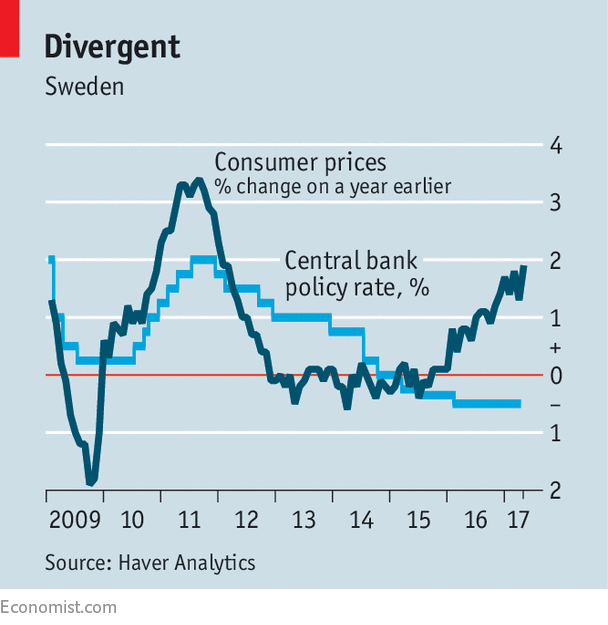
One explanation for keeping policy so loose is that the inflation figure is deceptive. Johan Javeus of SEB, a bank, points out that some of the increase was driven by one-off factors, such as rises in air fares and energy prices. After raising rates prematurely in 2010 and 2011, the Riksbank is loth to do so again.
But also, it is hemmed in by the European Central Bank (ECB). The…Continue reading
China’s new cyber-security law is worryingly vague
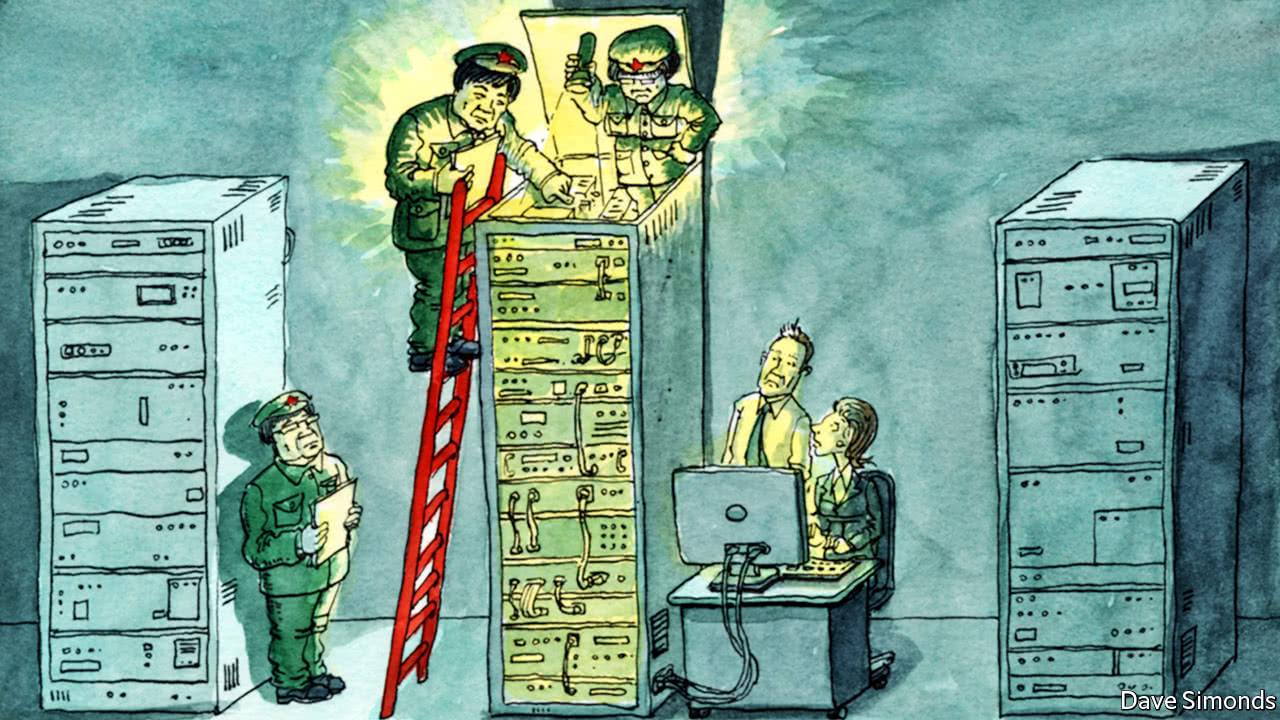
“IF YOU want to stay in China, you have to go all in.” So says James Fitzsimmons of Control Risks, a consultancy, of the impact China’s new cyber-security law will have on multinational companies (MNCs). These firms have moaned for months about the law’s intrusive and vague provisions and asked for a delay in its implementation, but to no avail. It came into force on June 1st, and foreign firms are now scrambling to figure out its implications. Mr Fitzsimmons, for one, is convinced that they must take the costly step of separating their local IT systems from their global networks.
At first blush, the law seems a reasonable effort at tackling two areas of policy in need of reform. The first is cyber-security. Companies in industries deemed to be critical must now ensure that their technology systems are “secure and controllable.” They must store important data locally, and will be subject to audits by official inspectors. Susan Ning of King & Wood Mallesons, a Chinese law…Continue reading
Global monetary policy is not tightening as expected
AT ITS outset, 2017 seemed likely to mark a turning-point for global monetary policy. The Federal Reserve had just raised its main interest rate by a quarter-point and was expected to add three such increases this year—or perhaps even more, if a new Republican Congress could agree on tax cuts with a new Republican president. In that case, low interest rates would no longer be the “only game in town” in terms of policy stimulus. The European Central Bank (ECB) would begin to wind down its programme of quantitative easing, or QE, probably by mid-year. The Bank of Japan would cut back on QE, too. In September it set a target yield for ten-year bonds, of 0.0%, which would probably require fewer asset purchases. Of the global giants, only China seemed likely to keep its policy settings as loose as in 2016.
In this context, the ECB’s meeting on June 7th and 8th was not long ago eyed as pivotal. The bank’s staff would produce new, upbeat economic forecasts. Many ECB-watchers (and maybe…Continue reading
Taiwan’s economy has defied the pessimists

TAIWAN’S president, Tsai Ing-wen, has had a tough first year in office. Her popularity has plummeted as she has struggled to find a path through thorny policy debates. Hope that she might have a staunch ally in Donald Trump has receded. China has ratcheted up pressure, leaving Taiwan more isolated internationally. Less noticed is that Ms Tsai has, for now, won over one important group: investors. Cash inflows from abroad have made Taiwan’s stockmarket and currency among Asia’s best performers. Foreign direct investment in the electronics industry has also surged.
The government, to be sure, cannot take too much credit. A revival in global trade is the main reason for Taiwan’s improved fortunes. Exports rose 15% in the first quarter, the fastest rate in six years. The big gains for Taiwan’s stockmarket—up 40% in dollar terms since Ms Tsai’s inauguration—are about the same as those in South Korea, another economy whose growth is…Continue reading
In Donald Trump’s America, the left rethinks its economics

DEMOCRATS thought they knew the boundaries of acceptable economic discourse. Then came Donald Trump, who trashed them, yet won the presidency. He upended Republican positions on trade, and exposed the vulnerability of the Democratic Party on its home economic turf: the well-being of American workers. He also seems to have liberated the left to think big ideas—and confront hard questions.
Since 1992 Democratic economic policy has been rooted in technocratic centrism, meant to smooth the rough edges of the market. “We reject both the do-nothing government of the last 12 years and the big-government theory that says we can hamstring business and tax and spend our way to prosperity,” read the party platform in 1992. “Instead we offer a third way.” This was a desperate effort to escape the political wilderness. Yet it also reflected intellectual trends in economics. Inflation and falling productivity in the 1970s seemed to bear out the views of economists such as Milton Friedman, that…Continue reading
Why flying in the summer is so hellish
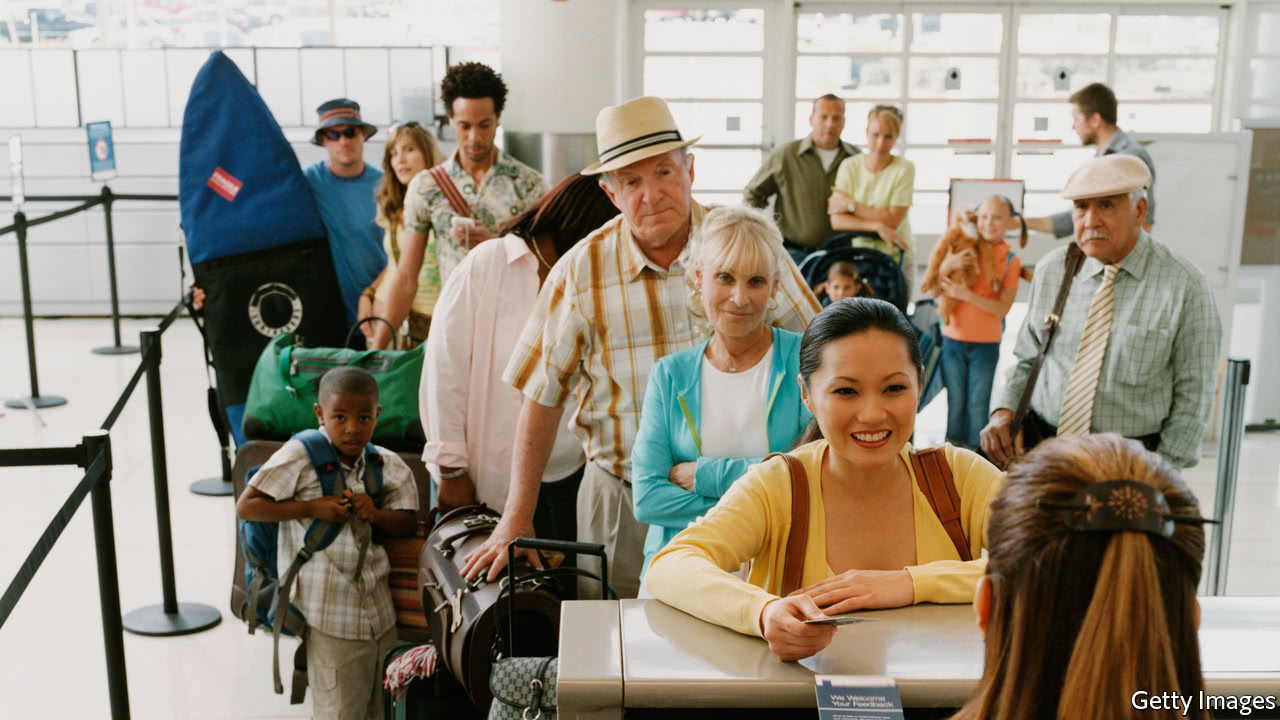
HERE in America, we recently celebrated Memorial Day, when barbecues and pool openings mark the beginning of summer, astronomers be damned. For leisure travellers, that means sun, surf and spritzes. For business travellers, it can mean headaches, as airport lines grow ever longer and flight delays more common.
Who is to blame for the annoyances of flying in the summer? Partly, it is those aforementioned leisure travellers. Longer waits in security lines are largely a question of volume. Airlines for America (A4A), an industry group, forecasts that more than 234m passengers will use America’s carriers from June through to August. That would represent a new record, topping last year’s number by 4%. A4A attributes the expected increase to a growing economy and “historically low airfares”. But really, this is a familiar pattern. In 2016 the group also predicted a record-high number of summer…Continue reading
The threat of a laptop ban resurfaces
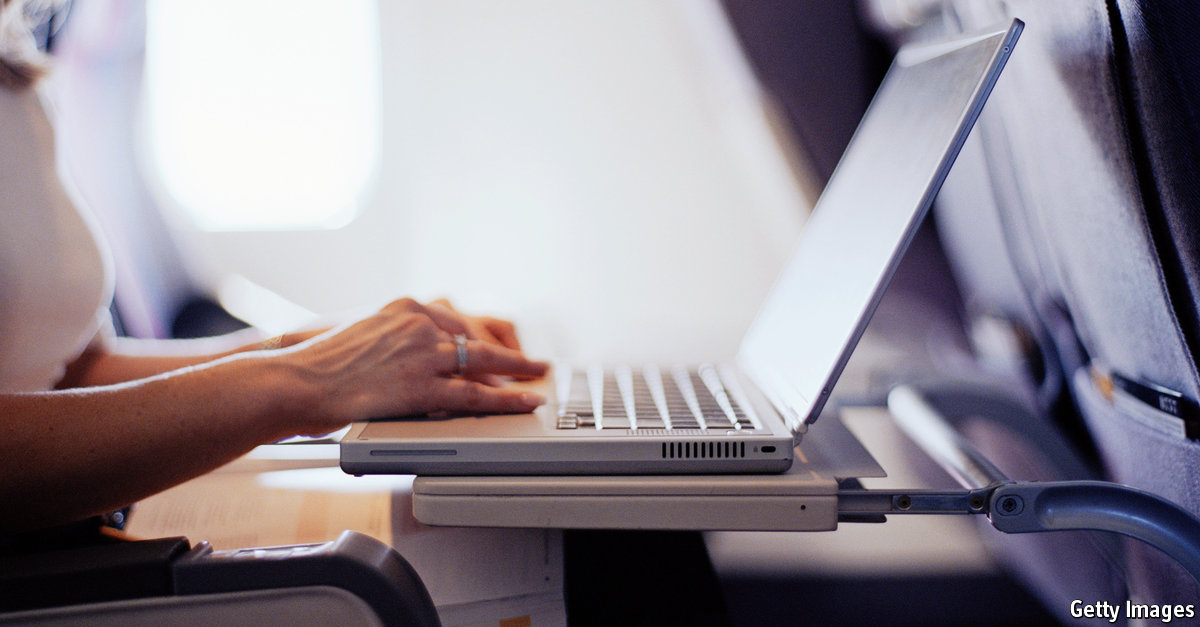
MODERN air travel has become less tolerable in many ways. Seats are narrower, legroom more cramped and luggage space elusive. But in one way it has vastly improved. Keeping yourself amused on a flight once meant squinting at a flickering movie on a distant screen. Today flyers can travel with a library of films, music and books on a small electronic device. On-board Wi-Fi also means business folk can work uninterrupted.
That may change. On May 28th, John Kelly, America’s homeland security secretary, said that the country was considering extending a ban on large electronic devices in cabins to cover all international flights to and from the country. Currently only passengers on planes taking off from eight mostly-Muslim countries are forced to place their laptops, tablets and the like into the hold.
The idea has not come out of the blue. Officials have hinted for months that they were considering introducing such a ban. Earlier this…Continue reading